
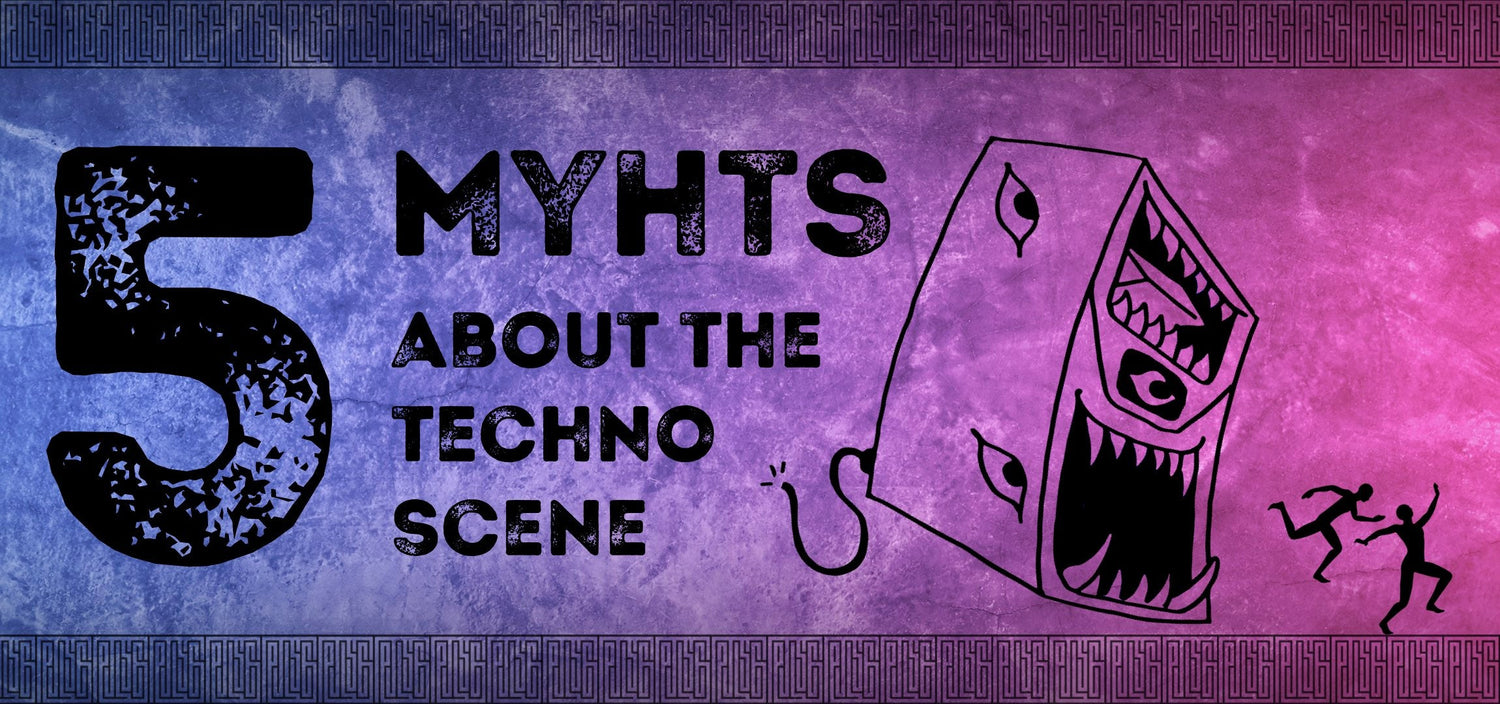
Every subculture collects myths, and techno carries a heavy set. Most come from people who have never stood in a room while a Detroit record does its work. The music gets misread as noise, its history as a trend, its crowd as a cliché. The records say otherwise.

Is techno just noise?
No. Techno is composed music, arranged on drum machines and synthesizers with as much intent as anything played on a guitar. It was built around Detroit in the early 1980s by three friends from the suburb of Belleville, Juan Atkins, Derrick May and Kevin Saunderson, who turned machines like the Roland TR-909 into a future-facing sound. Atkins is widely hailed as the genre's godfather, and the name itself was set by a 1988 UK compilation of their tracks, Techno! The New Dance Sound of Detroit.
What sounds like a wall up close is layers doing separate jobs: a kick to move you, a hat to keep time, a bassline to pull the room, a filtered chord to set the mood. Take the layers apart and the craft is obvious. Noise is an accident; techno is arrangement.
Is techno a passing fad?
It has outlived most of the genres that called it one. Techno is past forty, and its institutions have decades of their own: Time Warp in Germany since 1994, Awakenings in the Netherlands since 1997, and Movement in Detroit since 2000. Each has run every year since and grown.
Fads do not do that. Techno keeps splitting into new strains, from dub techno to hard techno, and seeding scenes from Berlin's warehouses to Tbilisi's Bassiani. It is not surviving; it is compounding.
Is techno just about the party?
The party is the surface. Underneath is a culture built on music and the people in the room, and for a lot of them the floor is the opposite of escapism. The pull is shared attention: a few hundred strangers locked into the same rhythm, moving as one. That belonging is not a soft bonus, and there is real science on why the dancefloor is good for you.
Techno's roots are communal too. It came out of Black, working-class Detroit and spread through clubs that made a point of welcoming whoever walked in. The venues change; the idea does not. Show up, and you are part of it.
Is techno actually repetitive?
Repetition is the point, and it is doing work. Techno is built for the floor and the DJ: steady four-to-the-floor kicks, long arrangements, tracks engineered so a room can lock in and two records can blend seamlessly. Inside the loop, the changes never stop. A filter opens, a hat drops out, a new layer slides in, tension stacks for eight bars and releases.
The repetition is the frame; the small moves are the picture. To a passing ear it is one thing for six minutes. On the floor it is a slow build you feel in your chest before you notice it in your head.
Do you need to be an expert to enjoy techno?
No, and treating it like an exam misses the point. You do not need to name the track, the label or the year to feel a kick land. The culture rewards curiosity over credentials: turn up, face the speakers, let the repetition do its work. The heads who can identify a 1992 white label started exactly where you are standing.
Strip the myths away and techno is easy to describe: machine music from Detroit that grew into a forty-year culture, open to anyone willing to stand still and listen. Everything else is just noise about the noise.
FAQ
Who invented techno?
Techno is usually traced to Detroit in the early 1980s and to three friends from Belleville, Michigan: Juan Atkins, Derrick May and Kevin Saunderson. Atkins is often hailed as the genre's godfather. The name was cemented by a 1988 UK compilation of their music, Techno! The New Dance Sound of Detroit.
Is techno still popular?
Very. The genre is past forty and its biggest festivals have run for decades: Time Warp in Germany since 1994, Awakenings in the Netherlands since 1997, Movement in Detroit since 2000. Techno keeps spawning new strains and scenes worldwide rather than fading.
Why is techno so repetitive?
The repetition is deliberate. Steady four-to-the-floor patterns and long arrangements let a crowd lock into a groove and let DJs blend records seamlessly. Inside the loop, filters, drops and new layers change constantly, so the track keeps evolving even when the beat holds.
Do you need to be an expert to enjoy techno?
No. You do not need to know the artist, label or year to feel the music. The culture rewards curiosity over credentials: show up, face the speakers and let the rhythm carry you. Every expert started as a beginner on the floor.
Is techno just noise?
No. Techno is composed music, built layer by layer on drum machines and synthesizers. What sounds like a wall of sound up close is a deliberate arrangement of kick, bass, percussion and melody, each element placed with intent.


Leave a comment
All comments are moderated before being published.
This site is protected by hCaptcha and the hCaptcha Privacy Policy and Terms of Service apply.